Getting a keyword list right for a Manhattan dentist is a different job than doing it for a plumber in Bay Ridge. I've watched agencies burn a full retainer month on a 400-keyword spreadsheet that looked impressive in a deck, then watched the client's phone stay quiet because the terms mapped to nowhere near where the actual customers were searching.
The problem isn't the tools. There are a dozen good ones. The problem is that seo keyword research tools for new york agencies get used with a national mindset on a market that punishes national thinking harder than almost any other in the country. Five boroughs, hundreds of distinct neighborhoods, a dozen dominant languages, and a tourism calendar that reshuffles intent every few weeks. If your research doesn't account for that, it's decoration.
Key Takeaways
- Borough-level segmentation beats city-wide keyword lists almost every time you test it.
- Google Keyword Planner still sets the floor for volume data, but it lies about local nuance.
- Cross-checking keywords against your client's Google Business Profile categories catches mismatches no rank tracker will show you.
- Free tools can carry a small NY agency surprisingly far, as long as you add local SERP checks manually.
- Legal, real estate, and hospitality clients in NYC need different research workflows, not the same template with different nouns.
Why New York breaks standard keyword workflows
Walk into any agency in Flatiron and you'll hear the same complaint: the tools give you national data, but your client only cares about a radius of about two miles. A search for "personal injury lawyer" from a phone in SoHo and the same search from a phone in Riverdale are functionally different queries. Google knows this. Most keyword lists don't.
The borough problem
Manhattan clients compete in a dense, expensive, saturated field where even long-tail terms carry real CPC. Outer-borough clients often face less competition but also less search volume, which means a keyword tool showing "10 searches a month" might still be your best-performing term for a Staten Island contractor.
Here's the thing most agencies get backwards: they chase the highest-volume term in the niche, then wonder why the Jersey City client isn't ranking. Volume without geographic fit is just a number.
What actually works, in my experience, is building three separate clusters for any NY client: city-wide terms, borough-level terms, and neighborhood-level terms. Then you watch which cluster converts, not which cluster ranks first. A Staten Island plumbing company I worked with ranked page one for "plumber staten island" but got most of its calls from "plumber near me" searches with the phone physically in Tottenville. The neighborhood cluster did the heavy lifting.
The multilingual layer
Roughly a third of New York households speak a language other than English at home. That's not trivia, it's a keyword strategy. A restaurant in Sunset Park, a clinic in Flushing, a tax preparer in Washington Heights — all of them have search demand in Spanish, Chinese, Russian, or Bengali that English-only research completely misses.
Google Keyword Planner handles this better than most people assume, but you have to actually switch the language and location settings instead of leaving them on default. Most agencies never touch those dropdowns. Big mistake.
Which SEO keyword research tools actually earn their place
You don't need twelve subscriptions. You need three or four that cover different parts of the job, and you need to know which one to trust for what.

Google Keyword Planner
Free, tied directly to Google's own data, and still the reference point everyone else calibrates against. The problem? Its volume ranges are intentionally vague, and its local data is coarser than the city it's supposed to describe.
Where it shines: validating whether a term has any real search demand before you build a content plan around it. Where it fails: telling you whether that demand lives in Park Slope or Poughkeepsie. Treat it as the floor, not the ceiling.
Paid platforms
Semrush, Ahrefs, SE Ranking — pick according to budget and whether you need client-facing reporting baked in. For a small NY agency juggling six to ten retainers, SE Ranking's per-project pricing usually pencils out better than enterprise seats you'll never fill. For larger shops, Semrush's local pack tracking is worth the premium if local SEO is a real service line.
Free tools worth keeping
Google Search Console is underrated for keyword discovery. Your client's own query data beats any third-party estimate, because it's literally what people typed to find them. AnswerThePublic still surfaces question-based queries reasonably well, and Google Trends helps you catch seasonal spikes — critical for anything tourism-adjacent in this city.
| Tool | Best for | Weakness | Cost tier |
|---|---|---|---|
| Google Keyword Planner | Demand validation, broad volume | Weak local granularity | Free |
| Semrush | Competitor gaps, local pack tracking | Expensive per seat | Paid |
| SE Ranking | Client reporting, per-project pricing | Smaller keyword database | Mid-tier paid |
| Search Console | Real query data from the client | Only shows what already ranks | Free |
| Google Trends | Seasonality, tourism patterns | No absolute volumes | Free |
The trap is subscribing to everything. I've seen agencies pay for four platforms and use one. Pick based on which client types you actually serve, not on which tool demo looked best in a webinar.
Is there a genuinely free option worth using?
Yes — and for many smaller NY agencies, a free stack covers 80% of the work. Google Keyword Planner for volume, Search Console for real queries, Google Trends for seasonality, and a spreadsheet for manual SERP checks. That last part matters more than people admit.

Because here's what no free tool tells you: whether the local pack for a given term is dominated by businesses with strong review profiles. If it is, a keyword that looks easy on paper is actually a five-year slog. You find that out by searching the term yourself, from a device with location services on, and looking at what Google actually serves.
That manual step is tedious. It's also the difference between a keyword list that reads well and one that produces calls.
How do you connect keywords to Google Business Profile?
This is the step almost every agency skips, and it's where NY-specific keyword work actually pays off. Your client's GBP categories, services, and description are indexed. If the research says "emergency locksmith brooklyn" but the GBP lists the category as "Locksmith" with no service modifiers, you're fighting yourself.
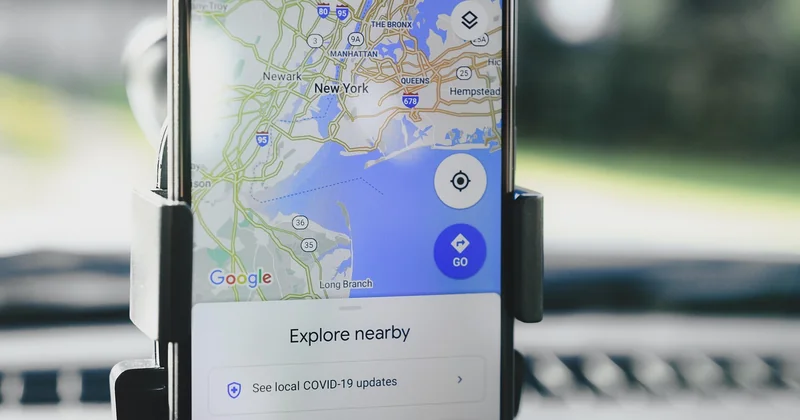
The fix is simple and unglamorous: before you finalize any keyword list, pull the client's current GBP, compare it against your top 20 target terms, and rewrite the categories and services to match. Do it once, properly.
What about neighborhood-specific landing pages?
They work, but only if the content is genuinely different per page. I've seen agencies spin up 40 borough landing pages with swapped city names and near-identical copy. Google ignores them, and so do customers. Write one strong page for the neighborhoods where your client actually has customers, and leave the rest alone.
Free tool or paid tool for a New York agency?
Depends on how many clients you're running and whether local SEO is a core service. Under five clients, mostly local businesses: the free stack plus a spreadsheet is fine. Above that, or if you're competing in legal, finance, or real estate, paid platforms pay for themselves quickly because the competitive gap analysis alone saves hours of manual work.
The mistake is choosing based on price alone. A $99/month tool that gives you one extra client win per quarter is cheaper than a free tool that costs you two proposals a year.
Matching tools to your client vertical
- Legal — high CPC, dense competition, needs paid competitor gap analysis
- Real estate — heavily seasonal, Trends data is essential
- Hospitality and restaurants — review-driven; GBP optimization matters more than keyword volume
- Home services — borough and neighborhood clusters outperform city-wide terms
- Healthcare — multilingual research is non-negotiable in many parts of the city
A workflow that actually holds up
Here's the sequence I keep coming back to, after enough projects where skipping a step cost me a retainer:
- Pull the client's Search Console queries for the last 90 days
- Build three clusters — city, borough, neighborhood
- Validate volume in Keyword Planner, filtered to New York
- Check the local pack manually for your top 20 terms
- Align GBP categories and services to your clusters
- Assign each cluster to a specific page, not a general one
- Revisit quarterly — the NY market shifts with seasons and neighborhood trends faster than most
Step four is the one people skip. Don't.
What actually matters in 2026
Tool features change constantly. The underlying logic doesn't. New York rewards keyword research that respects geography, language, and the fact that a customer in Astoria is not the same person as a customer in Chelsea, even if they're typing the same words into Google.
Pick two or three tools you trust. Learn their local settings properly. Spend the time you save on manual SERP checks instead of on a fourth subscription you'll forget to cancel. That's the whole game, and it hasn't changed much since I started doing this — which is probably the most reassuring thing I can tell you about a market this chaotic.